Learn · Explore · Discover

NEP-Aligned Preschool Curriculum in DLF Phase 3, Gurugram

The Dynamically Balanced Curriculum gives creativity, social skills and early academics equal weight, so children leave us curious, kind and ready for school.

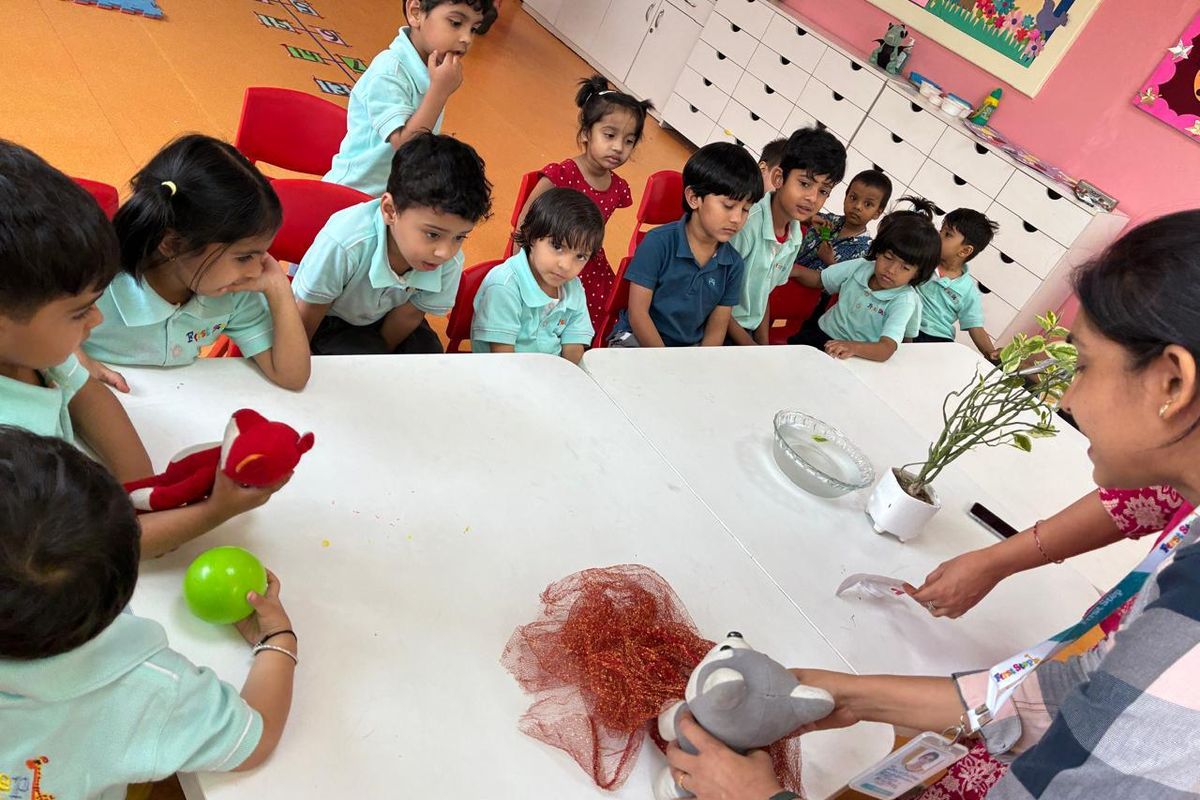
Children gathered around a table with their teachers during a hands-on science activity

What NEP and NCF alignment means for a young child

India's National Education Policy (NEP) treats the years from three to eight as the foundational stage, the period when the brain develops fastest and habits of learning take shape. The National Curriculum Framework (NCF) for this stage recommends play, activity, conversation, stories and exploration, rather than rote memorisation and early pressure.

In practice, that means children at our centre in DLF Phase 3 learn letters by hunting for sounds around the classroom, numbers by counting steps on the climbing wall, and cooperation by building something together. Worksheets have a place, but they are never the whole story. Teaching is also holistic, so physical development, emotional wellbeing, language, thinking and creativity are all treated as learning, not extras.

The three pillars of the Dynamically Balanced Curriculum

"Balanced" is the key word. A week that is all academics produces stressed children; a week that is all free play leaves gaps. Every lesson plan is built to give time to each of these three pillars.

Creative Thinking

Children are encouraged to imagine, invent and ask "what if?". Art without a template, dance and movement, pretend play, building challenges and open-ended questions all help children think flexibly.

These are the habits behind problem-solving later in life, and they are the part of early learning most easily squeezed out.

Self & Social Intelligence

Knowing your own feelings and getting along with others is a skill that can be taught. Circle time, turn-taking games, small group projects and gentle guidance through everyday conflicts help children build empathy, patience and self-control.

Age-appropriate self-defence training adds body confidence and awareness of personal safety.

Academic Mastery

Early literacy and numeracy are introduced step by step: listening and speaking, letter sounds, pre-writing, counting, patterns and simple problem-solving.

The aim is secure understanding at each stage, so that reading, writing and math feel achievable when children reach Grade 1, not a sudden leap.

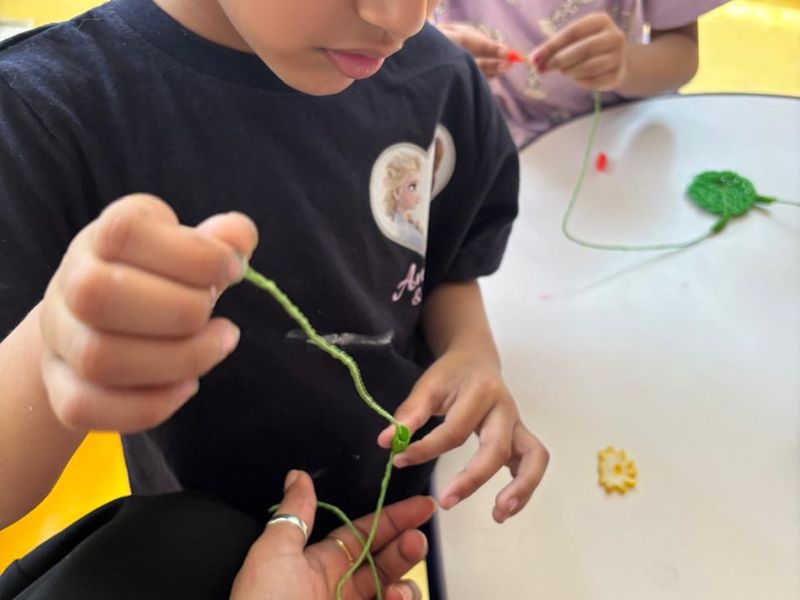
Close-up of a child threading beads onto a string

How activity-based learning works in our classrooms

Thoughtfully designed lesson plans. Teachers plan each week in advance for every age group, linking activities to the three pillars. Nothing is random, even when it looks like play.

The Montessori Lab. Hands-on materials let children work independently and at their own pace, building concentration and a sense of order. Montessori sits inside the wider curriculum rather than replacing it.

Learning through movement. The Gross Motor Play Zone, Ninja Pit, Wall Climbing Zone and Trampoline Park are used as learning spaces, for counting, following instructions, taking turns and pushing past "I can't".

Language everywhere. The children's library, reading centres and dance room fill the day with stories, rhymes, songs and conversation.
A typical four-hour preschool morning

The pattern below shows how a morning in Nursery, LKG or UKG might flow. Younger children in Play Group and Pre-Nursery follow a gentler version with more free play and shorter activities.

  1. Welcome and free choice

    Children arrive, greet friends and choose a quiet activity, which gives them a calm start and a sense of control.

  2. Circle time

    Songs, the day's plan, weather and feelings check-ins, and a short talk about the week's theme.

  3. Focused learning

    Small-group work on literacy or numeracy, often using hands-on materials from the Montessori Lab.

  4. Snack together

    Nutritious food from the in-house kitchen, with practice in serving, sharing and tidying up.

  5. Movement

    Active time in one of the play zones, planned to build a particular physical skill.

  6. Creative and social play

    Art and craft, dance, pretend play or a group project linked to the theme.

  7. Story and goodbye

    A story from the reading centre, a look back at the morning, and a calm handover to parents or to day care.

Parents as partners

Children learn more when home and school pull in the same direction, which is why structured parent–teacher interaction is built into how the centre runs. You will hear about what your child is exploring, how they are growing and where they might need encouragement. The team will also suggest simple ways to carry that learning into home life, whether it is a song from circle time or a counting game for the car.

That partnership starts before admission. On a centre walkthrough, teachers can show you a lesson plan, explain how the three pillars look for your child's age, and answer questions about readiness and routines.

Learn, Explore, Discover

The Discover First Step ethos is short enough for a four-year-old to remember. Learn means building real skills. Explore means having the freedom to try, touch, ask and get things wrong. Discover is the moment it clicks, which is what every good early years classroom works towards. Take a look at how this plays out across our preschool programs from Play Group to UKG, or see the spaces in our photo gallery.

See the curriculum in action

Book a centre visit in DLF Phase 3 and ask a teacher to walk you through this week's lesson plan for your child's age group.

Call Now WhatsApp